



Complete Guide to Electrode Die-Cutting Machine Selection: Scientific Decision-Making from "Functional" to "Optimal"
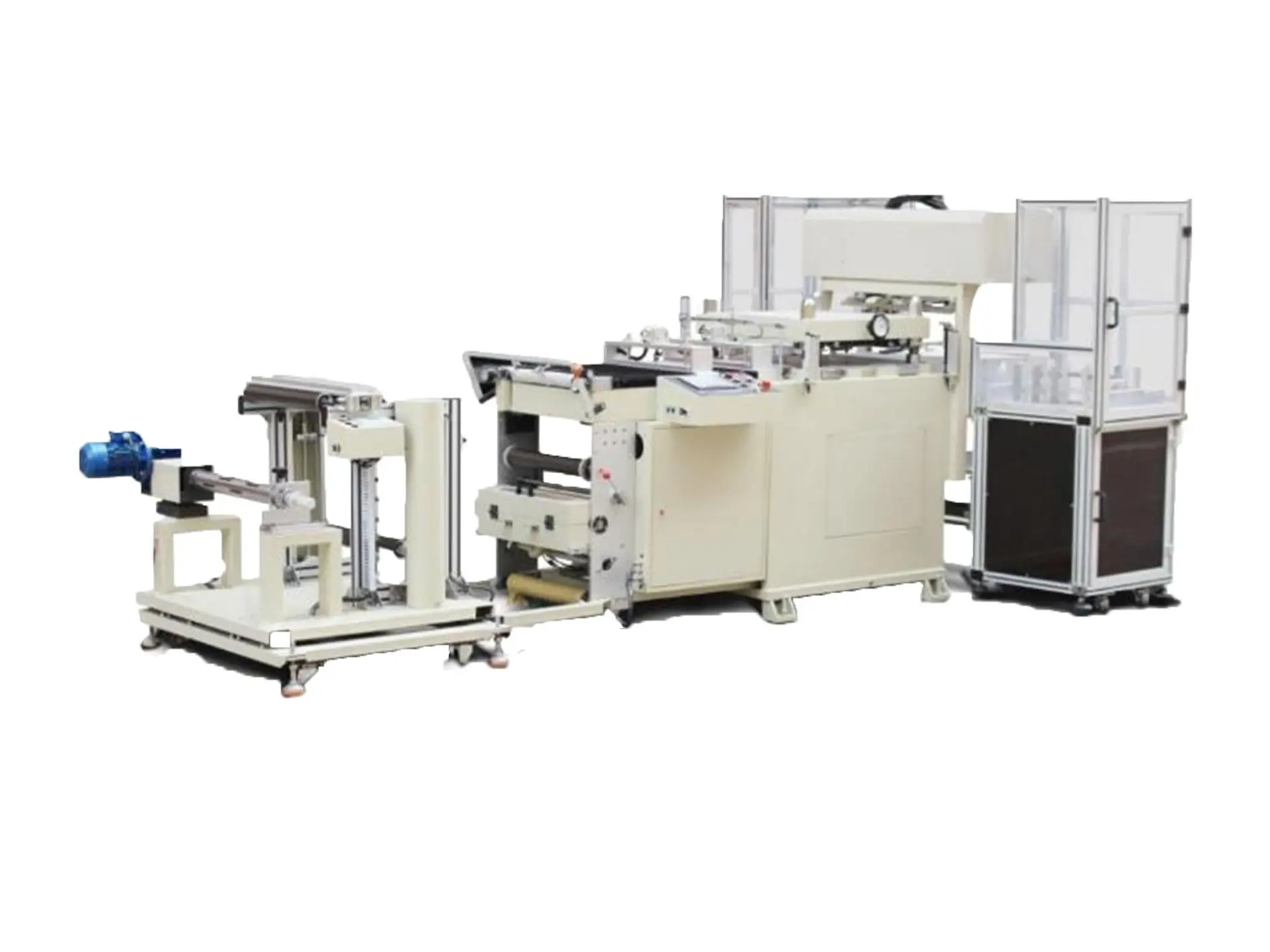
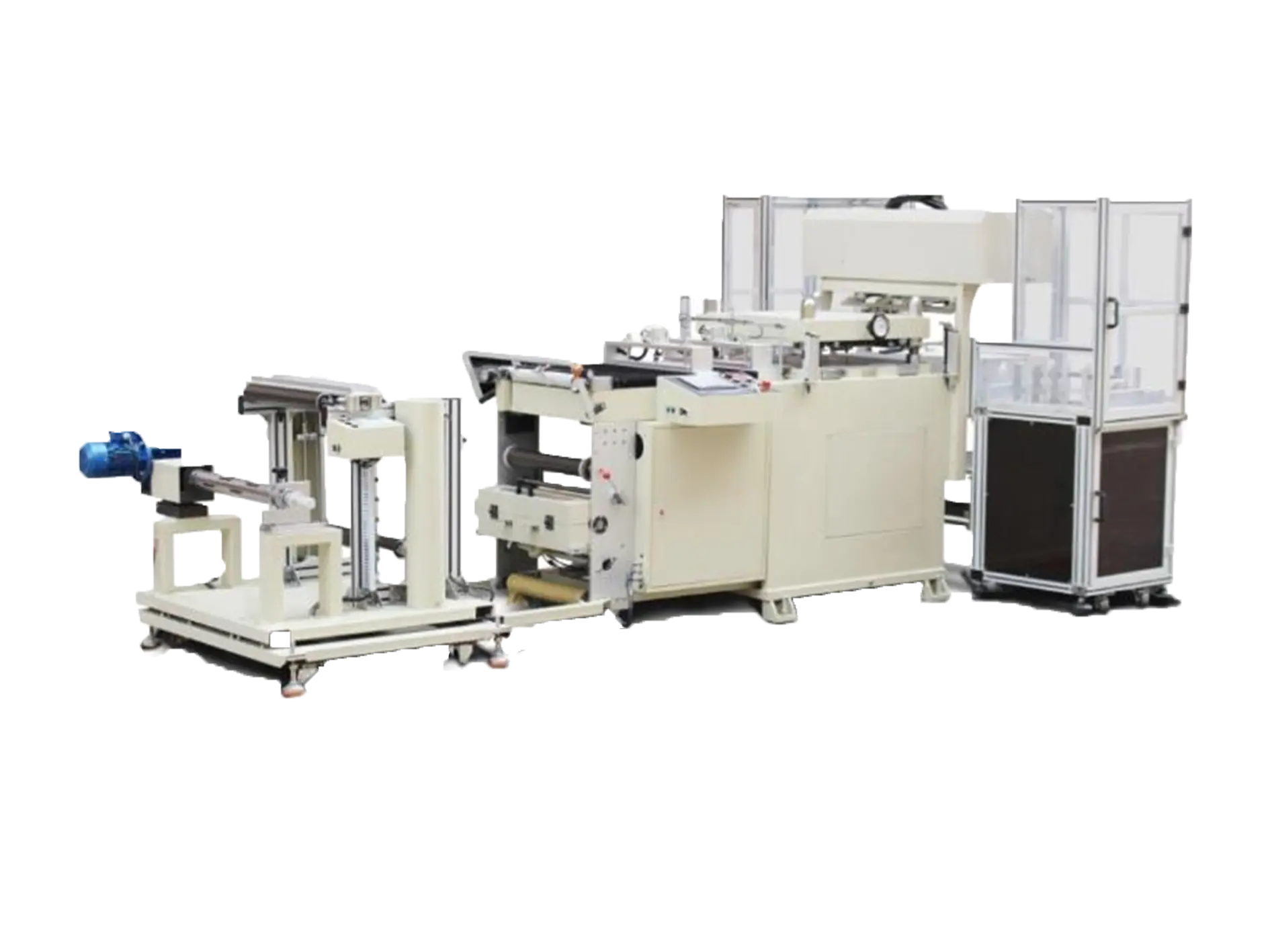
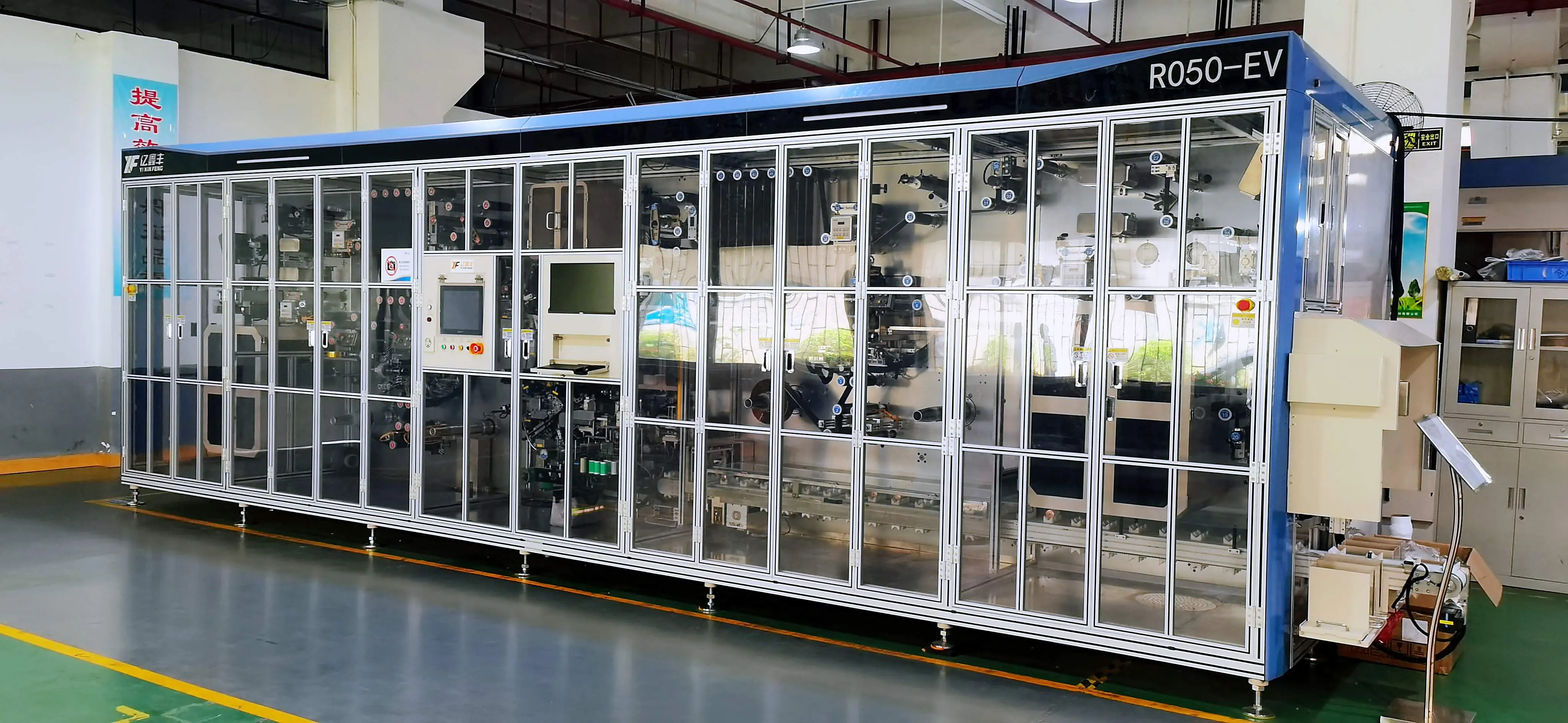
In the vast industrial chain of lithium battery manufacturing, electrode Die-Cutting is a critical process that bridges upstream and downstream operations. Its precision and efficiency directly determine cell performance, safety, and manufacturing costs. In the past, high-end electrode die-cutting technology was long monopolized by European, American, Japanese, and Korean companies, becoming one of the bottlenecks constraining China's new energy industry development. Today, through continuous innovation, domestic manufacturers represented by Dongguan Hongbao, Yixinfeng, and others have successfully launched new-generation intelligent, high-precision, large-format equipment, achieving import substitution and providing abundant choices for the market. Faced with a dazzling array of domestic models, how to scientifically select a die-cutting machine that is "most suitable" rather than "most expensive" or "most powerful" has become a core challenge for numerous battery manufacturers and material suppliers. From an R&D perspective, this article systematically organizes the selection logic to help you make informed decisions.(Electrode) (Graphite anode)(Silicon-carbon anode)(LFP - Lithium Iron Phosphate)(NCM/NCA - Ternary cathode material)(Sodium-ion battery)(Solid-state battery)(Electrolyte sheet)(Current collector)(Coating)(Die-cutting)(Electrode die-cutting machine)(Slitting)(Coating machine)(Cell)(Tab cutting)(Irregular shape cutting)(Laser die-cutting)(Rotary die-cutting)(Flat-bed die-cutting)(CCD vision alignment)(Tension control)(UnWinding/Rewinding)(Waste removal and dust collection)(Burr)(Lithium battery manufacturing)(Power battery)(New energy industry)
I. Core Premise: Precisely Defining Your "Requirement Profile"
The first step in selection is not looking at machines, but introspective examination of your own needs. A clear "requirement profile" is the cornerstone of all evaluation.
Material and Process Characteristics
Material Type: Is it mainstream graphite/silicon-carbon anode, LFP/NCM cathode, or emerging sodium-ion battery materials, solid-state battery electrolyte sheets? Different materials' hardness, brittleness, adhesiveness, and thickness uniformity impose vastly different requirements on die-cutting processes.
Electrode Specifications: Web width (commonly 650mm, 800mm, 1000mm and above), thickness (including current collector and coating), coating areal density and consistency. These directly determine the required maximum die-cutting width and tension control precision of the equipment.
Cutting Shape and Quality: Is it simple rectangular slitting, or complex Tab cutting, irregular shape cutting? Are burr requirements ≤10μm, ≤15μm, or higher? What are the requirements for cross-section perpendicularity and dust-free contamination? These point to the equipment's motion control precision and dust removal system effectiveness.
Capacity and Efficiency Targets
Production Takt Time: What is the target single-line capacity (e.g., ppm, pieces/minute)? This determines requirements for equipment limit speed and stability. High-speed (e.g., 120m/min and above) equipment differs completely from medium-low speed equipment in structural design, transmission systems, and thermal management.
OEE (Overall Equipment Effectiveness) and Changeover Time: Is it single-product high-volume production, or multi-product, small-batch flexible production? The latter places extremely high demands on equipment quick changeover (SMED - Single Minute Exchange of Die) capability and recipe management systems.
II. Key Performance: Peering into the Technical Core of Equipment
When requirements are clear, you can deeply evaluate the equipment's core performance parameters. These parameters should not just look at maximum values in brochures, but focus on sustainable, stable working ranges.
Precision System: Stability Trumps All
Cutting Precision: Typically requires full web cutting precision ≤±0.1mm, with high-end equipment achieving ≤±0.05mm. Focus on long-term repeat positioning precision, not just short-term test data.
Tension Control: This is the lifeline affecting precision and unwinding/rewinding quality. Excellent equipment adopts full closed-loop multi-zone tension control (from unwinding, process to rewinding), with tension fluctuations controlled within ±1%, ensuring no stretching or wrinkling of electrodes at high speeds.
Alignment System (CCD Vision): For die-cutting requiring alignment with coating edges or Mark points, the vision system's recognition precision, response speed, and anti-interference capability (e.g., coping with coating color differences, stains) are crucial.
Efficiency and Stability: Endurance at High Speed
Transmission and Drive System: Application of high-precision servo motors and direct drive technology is mainstream. Examine whether acceleration/deceleration curves are smooth, and whether vibration can be suppressed at high speeds—this directly relates to tool life and cutting quality.
Die-Cutting Unit: Is it flat-bed die-cutting, rotary die-cutting, or laser die-cutting? Each has pros and cons. Flat-bed is mature and stable, suitable for vast majority of materials; rotary offers higher efficiency for high-volume production; laser has no tool wear, suitable for complex graphics but may have heat-affected zones. The key is pressure control precision and online pressure monitoring and compensation capability.
Waste Removal and Dust Collection: Efficient waste removal systems and negative pressure dust collection systems are key to ensuring continuous production and cleanliness. Is waste automatically rewound or crushed and collected? Does dust removal efficiency meet workshop cleanliness requirements?
Intelligence and Maintainability
Digitalization and Predictive Maintenance: Does the equipment have comprehensive sensor networks (vibration, temperature, pressure)? Can it achieve digital twins of process parameters, real-time monitoring and traceability of quality data? Does it have health prediction functions for key components (e.g., main shafts, bearings)?
Human-Machine Interaction and Diagnostics: Is the operation interface intuitive? Are fault alarm messages precise enough to guide engineers to quickly locate problems? What are the remote diagnostics and technical support capabilities?
III. Supplier Evaluation: Choosing a Long-Term Partner
Equipment is "hard power"; a supplier's "soft power" equally determines long-term value.
Technical Foundation and Innovation Capability: Examine the supplier's R&D team background, patent portfolio, and cooperation cases with leading battery enterprises. Can they provide customized solutions for your special materials or processes?
After-Sales Service and Support System
Response Speed: Is 7x24 technical support provided? What is the average arrival time for on-site engineers?
Spare Parts Inventory: Are commonly used spare parts and core components (e.g., high-precision guide rails, servo drives) available with adequate localized inventory?
Training System: Is systematic training provided from operation, maintenance to process optimization, helping your team quickly master the equipment?
Ecosystem Collaboration Capability: Excellent suppliers can not only provide the main machine but also recommend or support with verified high-quality cutting dies, cushion pads, cleaning consumables, and even assist in optimizing upstream and downstream processes (e.g., matching with coating machines, slitting machines), forming overall solutions.
IV. Cost and Value: Calculating Full Lifecycle Economics
Procurement decisions cannot look only at bare machine prices; full lifecycle Total Cost of Ownership (TCO) analysis is required.
Initial Investment: Equipment purchase cost.
Operating Costs: Energy consumption, yield rate (material savings), production efficiency (output per unit time), labor costs.
Maintenance Costs: Preventive maintenance costs, spare parts consumption costs, unplanned downtime losses.
Opportunity Costs: Order delivery risks due to poor equipment reliability, future upgrade or obsolescence costs due to technological lagging behind.
A high cost-performance equipment should be the one with the lowest TCO while meeting your core process requirements. The greatest advantage of domestic equipment lies precisely in providing more competitive TCO, faster service response, and lower subsequent maintenance barriers.
V. Decision Framework: Balancing Present and Future
Final decisions should be based on systematic trade-offs:
For Startups or Mid-to-Low End Capacity Needs: Priority may be given to mid-to-high end models from mainstream domestic brands. They fully meet requirements in precision and speed, offer extremely high cost-performance, and provide convenient after-sales service.
For Leading Enterprises Pursuing Limit Performance or Special Material Production: Detailed benchmarking may be conducted between high-end models from domestic top brands (e.g., Hongbao, Yixinfeng) and imported brands. Key evaluation is whether the marginal performance improvement brought by imported equipment in your specific materials and application scenarios is sufficient to cover their high purchase costs, long delivery cycles, and inconvenient subsequent maintenance.
Reserve Upgrade Space: Consider enterprise product planning for the next 3-5 years. Does the equipment have potential for modular upgrades (e.g., from single-cutting to multi-lane cutting, adding vision inspection modules)? Does the software system support remote updates?
Conclusion: Returning to the Essence of Manufacturing
Selecting an electrode die-cutting machine is essentially an investment in "certainty." You are not investing in a pile of steel and code, but in the deterministic capability to stably produce qualified electrodes for years to come. The rise of domestic electrode die-cutting machines has given us more choices and bargaining power. Before making final decisions, strict on-site trial cutting is strongly recommended—using your own materials, running continuously at target speeds for sufficient duration, comprehensively testing precision, stability, yield rate, and usability.
Remember, there is no "best" equipment, only the equipment "most suitable" for your current process route, capacity planning, and financial model. In this precision competition concerning power battery performance and costs, a correctly selected die-cutting machine is your most reliable starting block.